

Hazmat Transport Security Seals: A 2026 Application Guide for Chemical, Petrochemical, and Fuel Logistics
The 2:14 AM Siphon
At 2:14 AM on a Tuesday in July 2026, a fuel dispatcher at a Houston petrochemical terminal noticed that the reconciliation report for outbound load 4471-B was off by 218 gallons of gasoline. The tanker left the loading rack with a cable seal on the discharge valve and a bolt seal on the rear door. Both seal numbers matched the bill of lading. The driver signed off at the gate. The receiver at the Louisiana fuel depot accepted the load without a discrepancy flag. Three days later, after a tip from an anonymous caller, investigators traced the loss to a technique called “drip-and-drain”: a thin needle inserted through the valve gasket, product withdrawn over six hours in a remote parking lot, and the gasket resealed with industrial epoxy that left no visible trace. The cable seal on the valve handle was never broken. The bolt seal on the rear door was never touched. The seals did exactly what they were designed to do: prove that the handle and the door were not opened. They said nothing about the gasket.
This is the reality of hazmat transport in 2026. Cargo theft losses have doubled year-over-year according to Verisk CargoNet, with the average loss per incident now exceeding $564,000. Chemical, petrochemical, and fuel shipments sit at the top of the target list because of their value per gallon, their resale market, and the operational reality that a single mechanical failure can trigger outcomes that go far beyond economic loss. When the cargo is reactive, toxic, or flammable, the wrong seal — or the right seal applied to the wrong access point — is not a paperwork problem. It is a safety problem.
Why Hazmat Demands a Different Sealing Framework
Standard cargo security programs are designed for general freight where the worst outcome is a missing pallet. Hazmat operations operate under a different risk equation. Four regulatory frameworks apply simultaneously, and each one imposes seal-related obligations that do not exist in ordinary trucking:
DOT 49 CFR governs U.S. domestic hazmat transport through the Pipeline and Hazardous Materials Safety Administration. PHMSA’s incident database shows that seal failures, improper seal applications, and missing seals appear as root causes in a meaningful share of containment breach investigations, particularly for Class 3 (flammable liquids), Class 8 (corrosives), and Division 5.1 (oxidizers).
ADR is the European Agreement concerning the International Carriage of Dangerous Goods by Road. Any shipment crossing into or through the EU must meet ADR seal requirements, including the explicit rule that seals must be applied before the vehicle leaves the loading site and verified at every transfer point.
IMDG Code (International Maritime Dangerous Goods) governs vessel loading. Containers carrying hazmat by sea require seals applied at origin that remain intact through the ocean transit and are verified at the discharge port. ISO 17712-classified seals are the practical baseline here, and most port authorities will not release an IMO-classified container without a verifiable high-security seal record.
IATA Dangerous Goods Regulations apply to air cargo. The recent IATA guidance material on Improvised Incendiary Devices has heightened attention on supply chain integrity for air freight, with explicit recommendations on tamper-evident seals for vehicles transporting cargo from Known Consignor or Regulated Agent facilities.
Layered over these four transport modes, customs and supply chain security programs — C-TPAT in the United States, AEO in Europe, PIP in Canada — all converge on the same seal requirement: the seal must be ISO 17712-classified, the seal number must be documented at the point of application, and the seal must be verified at every custody transfer. There is no “general cargo” exception for hazmat. The seal program is the proof that the chain of custody is intact.
Five Hazmat Scenarios and Their Seal Selection
Hazmat is not one thing. A tanker of gasoline, a 25-ton ISO tank of acrylonitrile, a railcar of caustic soda, a flexible intermediate bulk container of pesticide, and a 55-gallon drum of solvent all face different physical, regulatory, and criminal threat profiles. The seal program must reflect that.
Scenario 1: Road tanker (fuel, lubricants, liquid chemicals). The primary vulnerability is the discharge valve. Cable seals with a minimum 3.5 mm steel cable diameter are the standard, applied flush and tight against the valve handle to defeat the shimming technique described above. For spark-sensitive flammable vapors, aluminum-bodied cable seals eliminate friction ignition risk during installation. The secondary vulnerability is the rear manhole or top dome; bolt seals with anti-spin locking mechanisms are the appropriate choice here.
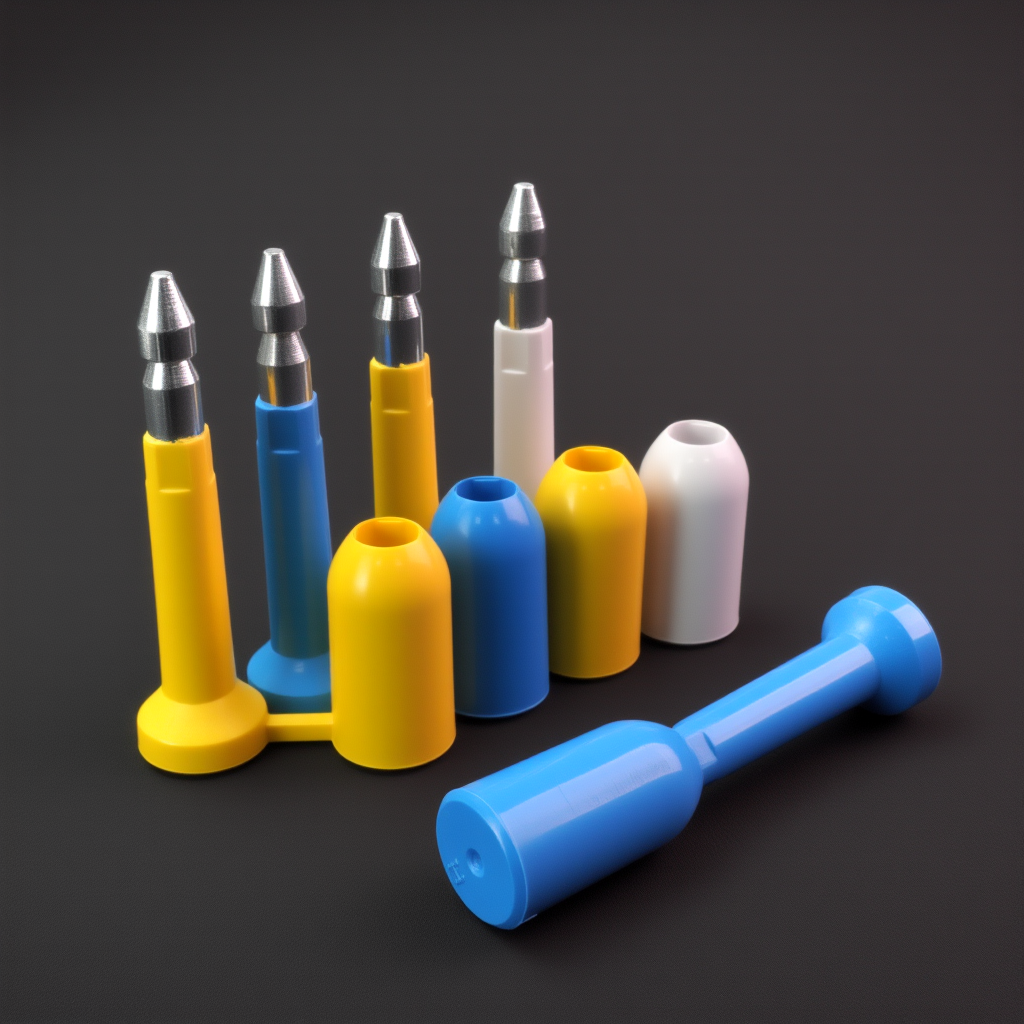
Scenario 2: ISO tank container (international chemical shipments). ISO tanks cross borders by road, rail, and sea, which means DOT, ADR, and IMDG obligations stack. Bolt seals rated ISO 17712 “H” (High Security) are the baseline. Cable seals can be added to secondary valves for layered verification. For high-value or high-consequence cargo, RFID-enabled bolt seals provide a digital audit trail that complements the physical barrier.
Scenario 3: Railcar (refined product, caustic, acid). Railcar dome loading is the primary access point. Metal strap seals with fixed-length steel strapping are the historical standard here, increasingly supplemented by heavy-duty cable seals for applications where the dome latch geometry allows. For Class 8 corrosives and high-pressure gases, redundant sealing — dome plus outlet valve — is becoming standard practice after several 2025 incidents where single-point sealing was exploited.
Scenario 4: Flexible Intermediate Bulk Container (FIBC) and bagged dry chemicals. Rigid metal seals slide off the gathered fabric closure of a FIBC. Adjustable pull-tight plastic seals with high tensile strength cinch around the closure and lock permanently into a stainless steel insert. For powdered or granular hazmat that is also theft-targeted, color-coded seals (red for restricted lots, blue for cleared product) simplify visual inspection at the loading dock.
Scenario 5: Drums, jerricans, and packaged hazmat. For 55-gallon drums, plastic pull-tight seals threaded through the bung and the hasp provide cost-effective tamper evidence at scale. For drums containing reactive or pyrophoric materials, metal strap seals with laser-engraved serial numbers add a layer of physical resistance.
Seal-Type Selection Matrix for Hazmat Operations
The table below maps the eight primary seal product categories to the most common hazmat applications. No single seal category covers every scenario. A complete hazmat seal program uses multiple seal types assigned to specific access points.
| Seal Type | Primary Hazmat Application | Risk Layer | Key Specification |
|---|---|---|---|
| Кабельное уплотнение | Tanker discharge valve, ISO tank secondary valve, railcar outlet | Tier 1 secondary | ISO 17712 “S” minimum 3.5 mm cable, aluminum body for spark-sensitive loads |
| Уплотнение болта | ISO tank container main latch, dry-van trailer rear door, intermodal hazmat container | Tier 1 primary | ISO 17712 “H” rated, anti-spin mechanism, laser-etched serial |
| Container Lock Seal | Hazmat shipping container main door, ISO tank frame | Tier 1 primary | Heavy-duty locking bar, bolt-cutter resistant |
| RFID-пломба | High-consequence hazmat, multi-leg distribution, AEO-regulated transit | Tier 1 digital audit trail | Passive UHF 860–960 MHz, ISO 17712-classified physical barrier |
| Plastic Seal (pull-tight) | FIBC closure, drum bung, jerrican hasp, package-level seal | Tier 2 indicative | High-tensile strap, color coding, sequential numbering |
| Пломба для замка | Tank farm access gate, fuel depot locker, hazmat storage cabinet | Tier 2 facility | Reusable, key-controlled, corrosion-resistant body |
| Металлическое уплотнение ремешка | Railcar dome, fixed-length drum closure, valve lockout | Tier 1 fixed-length | Stainless steel or galvanized, laser-engraved identification |
| Пломба счетчика | Fuel dispenser calibration seal, pipeline flow meter, bulk terminal gauge | Tier 3 measurement integrity | Tamper-evident closure, regulatory traceability log |
A practical rule of thumb: the higher the consequence of unauthorized access, the more seal types should be applied at redundant access points. A 25-ton ISO tank of acrylonitrile moving from Houston to Rotterdam deserves bolt seals on the manhole, cable seals on each valve, and RFID-enabled seals with WMS or cargo tracking system integration. The cost of this layered sealing is a fraction of the cost of a single incident.
From Mechanical Barrier to Trusted Credential
The shift over the past five years is conceptual as much as it is technical. A seal is no longer a passive physical barrier waiting to be broken. It is an active data point in a chain-of-custody record. Three technology trends are driving this shift in hazmat operations specifically:
Laser-engraved identifiers survive chemical splash and abrasion that destroy printed barcodes. For shipments of solvents, fuels, and corrosive chemicals where the seal may be exposed to the cargo itself, laser engraving is no longer optional.
QR code verification links the physical seal to a backend database. A driver scans the seal at application, scans again at every transfer point, and the seal number is automatically compared to the bill of lading. Mismatches trigger an exception workflow before the load moves further down the chain.
RFID-enabled seals extend this further by allowing automated gate reads without a line-of-sight operation. For high-volume hazmat terminals where a single gate may process 80 loads per shift, RFID gates reduce verification time from minutes to seconds while producing a richer audit trail. Major operators including Sinopec SenMei have moved to electronic seal card readers at depot dispatch, where the physical seal is still applied but the release decision is governed by the digital record.
For hazmat specifically, the technology investment pays back quickly because the regulatory documentation requirement is already extensive. The same database that records the seal scan can record the SDS, the driver certification, the vehicle inspection, and the emergency response contact — turning a paperwork burden into an operational asset.
5-Step Hazmat Seal Program Implementation
Step 1: Map every access point on every vehicle, container, and storage location. Walk the operation. List every valve, manhole, dome, cabinet, and meter that could be opened without authorization. The seal program is only as comprehensive as this list.
Step 2: Assign a seal type and a risk tier to each access point. Use the matrix above as a starting point. Tier 1 access points get ISO 17712-classified seals. Tier 2 access points get cost-effective indicative seals. Tier 3 measurement points get meter seals with calibration traceability.
Step 3: Standardize the seal procurement specification. Cable diameter, body material, serial format, color coding, and customization (logo, barcode, QR) should all be locked in vendor contracts. Mixing seal specifications across suppliers creates audit and training friction.
Step 4: Train every handler on the seal procedure. Application, verification, exception handling, and documentation. Most seal failures in hazmat operations are procedural, not mechanical. A seal applied with slack, applied to the wrong access point, or documented in the wrong field is a seal that does not exist at audit time.
Step 5: Audit quarterly and after every incident. Pull a random sample of seal records, walk the load back through the custody chain, and verify that the seal number on file matches the seal number applied at origin, verified at transfer, and broken at destination. Quarterly audits catch procedural drift before it becomes a regulatory finding or a claim denial.
Common Failure Modes in Chemical Logistics
Three patterns appear repeatedly in hazmat seal incident investigations:
Single-point sealing on multi-access equipment. A bolt seal on the rear door of a dry-van trailer carrying drummed chemicals means nothing if the side panels are not also sealed. Multi-access equipment requires multi-point sealing or a documented justification for the single-point choice.
Seal verification skipped at transfer. A driver arrives at a transfer terminal, the receiving clerk checks the paperwork but does not visually inspect the seal. The seal number is recorded from the bill of lading rather than from the physical seal. A replaced seal passes through unchallenged. Verification means looking at the actual seal and reading the actual number.
Color-coded status ignored under time pressure. A red seal indicates a high-priority or restricted lot. Under dock pressure, the red seal gets treated like a green seal because the dispatcher is running behind. Color coding only works when the operations culture enforces it.
FAQ
Does every hazmat shipment need an ISO 17712 “H” seal? Not every shipment, but every shipment that crosses an international border or moves under a customs security program (C-TPAT, AEO, PIP) does. For purely domestic shipments under DOT only, the regulatory floor is lower, but most major hazmat operators standardize on ISO 17712 seals for simplicity and audit consistency.
Can chemical solvents erase the serial numbers on a seal? Yes. Low-quality seals with printed serial numbers can have those numbers removed by acetone, toluene, and several common industrial solvents. For chemical hazmat, specify laser-engraved serial numbers, which survive chemical exposure and physical abrasion.
What is the best seal for a tanker bottom discharge valve? A heavy-duty cable seal with a 3.5 mm or larger steel cable, applied flush and tight against the valve handle. The seal must be pulled absolutely tight to defeat the shimming technique. Aluminum-bodied cable seals are preferred for flammable vapors because they eliminate spark risk during installation.
Can RFID seals replace physical seals in hazmat operations? No. RFID seals are electronic seals built on top of physical seals. The physical seal remains the primary barrier and the proof of tamper evidence. The RFID component adds automated verification and digital audit trail. Removing the physical layer leaves only the digital record, which can be spoofed or recorded without an actual seal applied.
How long does a seal record need to be retained? DOT requires hazmat shipping records to be retained for two years after acceptance. C-TPAT and AEO documentation requirements typically extend retention to three to five years. For incidents or claims, retain indefinitely until the matter is closed.
What is the right seal for a FIBC of powdered pesticide? An adjustable pull-tight plastic seal with high tensile strength, applied through the gathered closure and locked permanently. For theft-targeted or restricted-use pesticides, color coding (typically red) and a sequential number add a visual layer that supports inspection.
Are reusable seals acceptable for any hazmat application? Reusable seals are not acceptable for hazmat transport seals. The single-use requirement is a regulatory and evidentiary baseline: a reusable seal cannot prove that access was not authorized, because the same seal can be removed and re-applied. Padlock seals are reusable but they are a facility access control, not a transport seal.
For hazmat operations where consequence multiplies by the minute, the right seal on the right access point is not a back-office decision. It is an operating discipline. Browse our cable seal collection for tanker and valve applications, our bolt seal collection for ISO tank and container security, and our RFID seal collection for high-consequence shipments that need a digital audit trail. Subscribe to our newsletter for ongoing hazmat compliance updates. Contact our team to discuss a seal program tailored to your specific chemical, petrochemical, or fuel logistics operation. Download our free Hazmat Seal Selection Checklist for field reference.
plastic security seal, pull-tight seal, tamper evident seal, hazmat transport seal, chemical logistics seal, ISO 17712 cable seal, high security bolt seal, hazardous materials seal, DOT hazmat compliance, ADR hazmat seal, IMDG seal requirement, tanker valve seal, ISO tank container seal, FIBC seal, drum security seal, RFID hazmat seal, petrochemical seal, fuel transport seal, supply chain security, cargo theft prevention
Written by: Kocents Engineering Team Updated: August 2026 Reviewed by: Kocents Quality Assurance
Kocents is an ISO 17712-certified security seal manufacturer specializing in bolt seals, cable seals, plastic seals, RFID seals, padlock seals, meter seals, metal strap seals, and container lock seals for global logistics and supply chain security.
Standards & References: ISO 17712:2013 (High Security Seal Classification), C-TPAT Minimum Security Criteria for Container Sealing, AEO Supply Chain Security Guidelines, TAPA FSR Physical Security Requirements.