

Smart Seals vs Traditional Security Seals: What Supply Chain Professionals Need to Know in 2026

When a shipment worth hundreds of thousands of dollars leaves a port, the difference between a standard bolt seal and an RFID-enabled smart seal can mean the difference between a minor security incident and a catastrophic loss. Global trade volumes keep climbing, cargo values keep rising, and the methods bad actors use to tamper with containers have gotten more sophisticated. If you are still relying solely on mechanical seals, you are operating with a blind spot that modern technology can now close.
The global security seals market was valued at USD 1.14 billion in 2025 and is projected to reach USD 1.81 billion by 2035, growing at a compound annual growth rate (CAGR) of 5.2%. Behind those numbers is a simple reality: supply chain operators are spending more on cargo security, and they are demanding more from their equipment. Smart seals equipped with RFID, GPS, and IoT connectivity are moving from niche products to mainstream tools for high-value logistics corridors.
This article breaks down what smart seals actually do, how they compare to traditional mechanical seals, and which scenarios call for each approach.
What Traditional Security Seals Bring to the Table
Traditional seals — including bolt seals, cable seals, plastic seals, and padlock seals — have been the backbone of container security for decades. Their job is straightforward: provide tamper-evident protection and signal when unauthorized access has occurred.
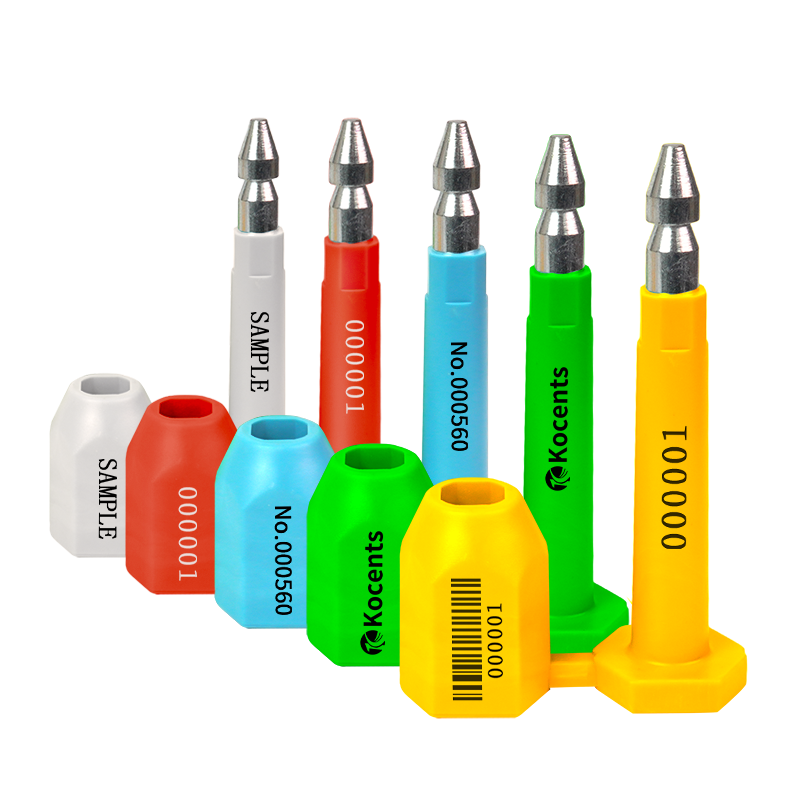
Bolt seals are among the most widely used for intermodal shipping containers. A bolt seal consists of a metal body with a protruding steel bolt that locks into the housing. Once engaged, the bolt cannot be removed without cutting. ISO 17712-certified bolt seals carry an “H” classification, meaning they meet minimum tensile and shear strength requirements. Carriers and shippers in C-TPAT-compliant supply chains typically require bolt seals with this certification.
Kablo contaları offer similar tamper-evident properties with added flexibility. A braided steel cable feeds through the container door hasp and locks at the other end. Cable seals are popular for irregularly shaped closure points and are often preferred for fuel tankers and bulk cargo containers.
Plastic security seals serve lower-risk applications. Pull-tight or indicative plastic seals are commonly used for utility meters, food transport, and retail logistics where the primary concern is evidence of access rather than resistance to forced entry.
The key advantage of traditional seals is simplicity. There is no battery to charge, no firmware to update, and no reader infrastructure to maintain. A container sealed with a bolt seal looks the same whether it is on a ship in the Pacific or sitting in a yard in Rotterdam. For operators running cost-sensitive operations on predictable routes, mechanical seals remain a perfectly valid choice.
Where Smart Seals Change the Game
RFID security seals and IoT-enabled container locks represent a meaningful step beyond tamper evidence. They add a layer of digital verification and continuous monitoring that mechanical seals simply cannot provide.
Real-Time Location Tracking
A smart container seal with GPS or cellular IoT connectivity allows logistics managers to track a shipment’s location throughout its journey. If a container deviates from its planned route, enters an unscheduled port, or sits too long at a transit point, the system can generate an alert. This matters most for high-value cargo — electronics, pharmaceuticals, automotive parts, and hazardous materials — where delayed intervention can translate into significant financial exposure.
Electronic Verification Without Physical Inspection
With traditional seals, verifying integrity requires someone to physically inspect the container and confirm the seal number matches the manifest. That process takes time and introduces human error. An RFID seal can be read automatically at gates, port checkpoints, and border crossings using fixed or handheld UHF readers. The seal’s unique ID, status, and timestamp are logged instantly, creating an auditable chain of custody.
Tamper Detection with Instant Alerts
Many RFID and electronic seals do more than show whether the seal was broken after the fact. Some models send real-time notifications when a seal is breached, cut, or removed without authorization. For shippers moving cargo through high-risk corridors, this shift from reactive to proactive alerting is a significant risk management improvement.
Integration with Supply Chain Management Platforms
Modern smart seals can integrate with TMS (Transportation Management Systems) and WMS (Warehouse Management Systems) through APIs. This means a tamper event or route deviation can trigger automated workflows — notifying the freight forwarder, updating the manifest, and flagging the shipment for inspection before it reaches its final destination.
Comparing Smart Seals and Traditional Seals Across Key Factors
| Factor | Traditional Seals | Smart Seals (RFID/IoT) |
|---|---|---|
| Upfront Cost | Low (1–10 per seal) | Higher (50–300 per seal) |
| Reader Infrastructure | None required | UHF readers, gateways, or handheld devices |
| Location Tracking | None | GPS/Cellular (real-time or passive) |
| Tamper Alert Timing | Discovered at inspection | Real-time notification |
| Data Logging | Manual seal number recording | Automatic digital audit trail |
| Battery Life | N/A (mechanical) | Passive RFID: none; Active IoT: 1–5 years |
| Best For | Cost-sensitive, low-risk routes | High-value cargo, regulated supply chains |
The ROI Question: When Does Upgrading Make Sense?
Not every shipment needs a smart seal. The technology premium only makes financial sense when the cost of a security incident — including cargo loss, supply chain disruption, insurance claims, and regulatory penalties — exceeds the added expense of electronic monitoring.
Scenarios where smart seals typically pay off:
- Pharmaceutical and cold-chain logistics, where temperature excursions or unauthorized access carry both financial and compliance consequences
- High-value electronics moving through ports with known cargo theft problems
- Cross-border shipments requiring detailed chain-of-custody documentation for customs audits
- Operations subject to C-TPAT, AEO, or similar security partnership programs, where digital verification records strengthen audit outcomes
Scenarios where traditional seals remain the right choice:
- Bulk commodities with lower per-shipment value
- Routes through well-established, low-risk logistics corridors
- Operations where reader infrastructure has not yet been deployed
- Short-term contracts where the capital outlay for smart seal equipment is hard to justify
Understanding the Technology Standards
If you are evaluating RFID seals, two specifications matter most: frequency and protocol.
Most RFID security seals for supply chain applications operate in the UHF band, specifically 860–960 MHz. This frequency range supports longer read distances — typically 1 to 12 meters depending on reader power and environment — which is essential for scanning containers as they pass through port gates or logistics hubs without stopping.
Protocol-wise, look for seals that comply with the EPC Gen2v2 (ISO 18000-63) standard. This ensures compatibility with the majority of commercial UHF RFID readers used in logistics. For sealed containers crossing international borders, particularly into the United States, verifying that the seal’s RFID chip meets GS1 standards for unique item identification is also important.
Making the Transition
Switching to smart seals is not an all-or-nothing decision. Many operators start by deploying RFID or IoT-enabled seals on their highest-risk lanes and scale up as they build operational familiarity and reader infrastructure.
Steps to get started:
- Audit your cargo risk profile. Identify which shipments carry the highest financial and operational risk from tampering or loss.
- Map your reader infrastructure. Determine where containers are currently inspected and where automated RFID reading could be integrated. Note that passive RFID seals require no power source at the container — reader infrastructure is installed at fixed checkpoints.
- Pilot with a defined lane. Run a 30-to-60-day trial on one high-value route, tracking incident response times and manual inspection labor before and after.
- Evaluate seal providers carefully. Beyond price, assess whether the seal is passive (no battery) or active, IP rating for outdoor environments, firmware update processes, and the provider’s track record in logistics applications.
Frequently Asked Questions
Can RFID seals replace bolt seals for ISO 17712 compliance? Some RFID-enabled bolt seals carry ISO 17712 “H” certification, meaning they meet the mechanical strength requirements even if they also have electronic features. Always verify the specific product’s certification status rather than assuming electronic capability implies compliance.
Do smart seals require cellular coverage to work? It depends on the technology type. Passive RFID seals — which have no battery — are powered by and communicate through a nearby reader. No cellular coverage is needed. Active IoT seals with GPS or cellular modems do require connectivity to transmit real-time data. If your routes include remote areas or ports with weak coverage, look for models that support store-and-forward operation.
How long do smart seal batteries last? This question only applies to active IoT seals with built-in GPS or cellular modules. Battery-free RFID seals are powered by the reader’s RF signal — no battery required. For active seals, battery life depends on transmission frequency. Models that broadcast continuously typically last 1–2 years; those set to transmit only at checkpoints can reach 3–5 years. Factor battery replacement and end-of-life disposal into your total cost of ownership.
Are smart seals reusable? Some models are designed for reuse and feature rechargeable batteries or replaceable cells. Single-use smart seals are more common and align with the tamper-evident model — once breached, the seal is discarded. Reusable models make more sense for operators running frequent shipments on fixed lanes with reader infrastructure at both ends.
What happens if a smart seal loses its signal? Most systems log the last known status and location. A gap in transmission does not necessarily mean tampering — it may simply reflect a dead zone or reader outage. Best practice is to inspect any container that shows a transmission gap at the next checkpoint.
Ready to Explore Smarter Container Security?
The shift toward electronic and IoT-enabled security seals is not a distant trend — it is happening now, driven by rising cargo values, increasingly regulated supply chains, and maturing reader infrastructure at major logistics hubs worldwide.
Whether you are protecting pharmaceutical shipments, securing cross-border automotive parts, or simply looking for a more efficient way to document chain-of-custody for your clients, smart seal technology offers a credible path forward.
Explore our RFID seal collection →RFID Mühür
Contact our team to learn more about which seal solution fits your operation → Bize ulaşın